Five habits for a longer, fuller life
In your 30s, 40s and 50s, everyday choices can help preserve the strength, energy and independence to keep living well. Start with how you move, eat and sleep, and the place you call home.

Think about the life you would like to be living at seventy. Perhaps it includes long walks through an unfamiliar city, a morning on the tennis court, a demanding project, or a journey that asks something of your legs as well as your imagination.
That future has a physical dimension. Money and flexibility create opportunities; strength, endurance and clear thinking help us enjoy them.
Our thirties, forties and fifties are a good time to take that connection seriously. Careers expand. Family responsibilities change. Travel and long working days can gradually displace the routines that once kept us well. The answer can begin with five ordinary habits, repeated often enough to become part of everyday life.
1. Walk more, and make it easy to leave the house
Walk to buy groceries. Take a short loop after lunch. Leave the desk between calls. Meet a friend on foot. These small decisions give movement a place in a day that might otherwise pass almost entirely in a chair.

Ten thousand steps is a useful daily ambition for many people who can comfortably build towards it. Health benefits begin well below that number, however. A 2025 review found that around 7,000 daily steps was associated with substantially better outcomes than very low step counts across several measures of health. These were largely observational findings, so they cannot promise an individual result. They do make a persuasive case for increasing movement from wherever you are starting. Read the research.
Build gradually. If your usual day contains 3,000 steps, a repeatable increase is a better first objective than an exhausting march followed by a week of inactivity. Combine short breaks from sitting with longer walks when time allows.
Where you live can make this easier. Safe pavements, shade, useful shops, parks and familiar faces give you reasons to go outside. A neighbourhood where every errand requires a car asks more of your calendar and motivation.
This is one reason Sovereign pays attention to walkable, social places in its guides to Madrid and Catalunya. Our editorial view is that a good address should support ordinary life: movement, human contact and somewhere pleasant to spend an hour. Climate, safety, accessibility and the street itself matter as much as the city's reputation.
2. Keep getting stronger
Strength has a quiet usefulness. It is there when you lift a suitcase, carry shopping upstairs, get up from the floor or steady yourself on uneven ground.
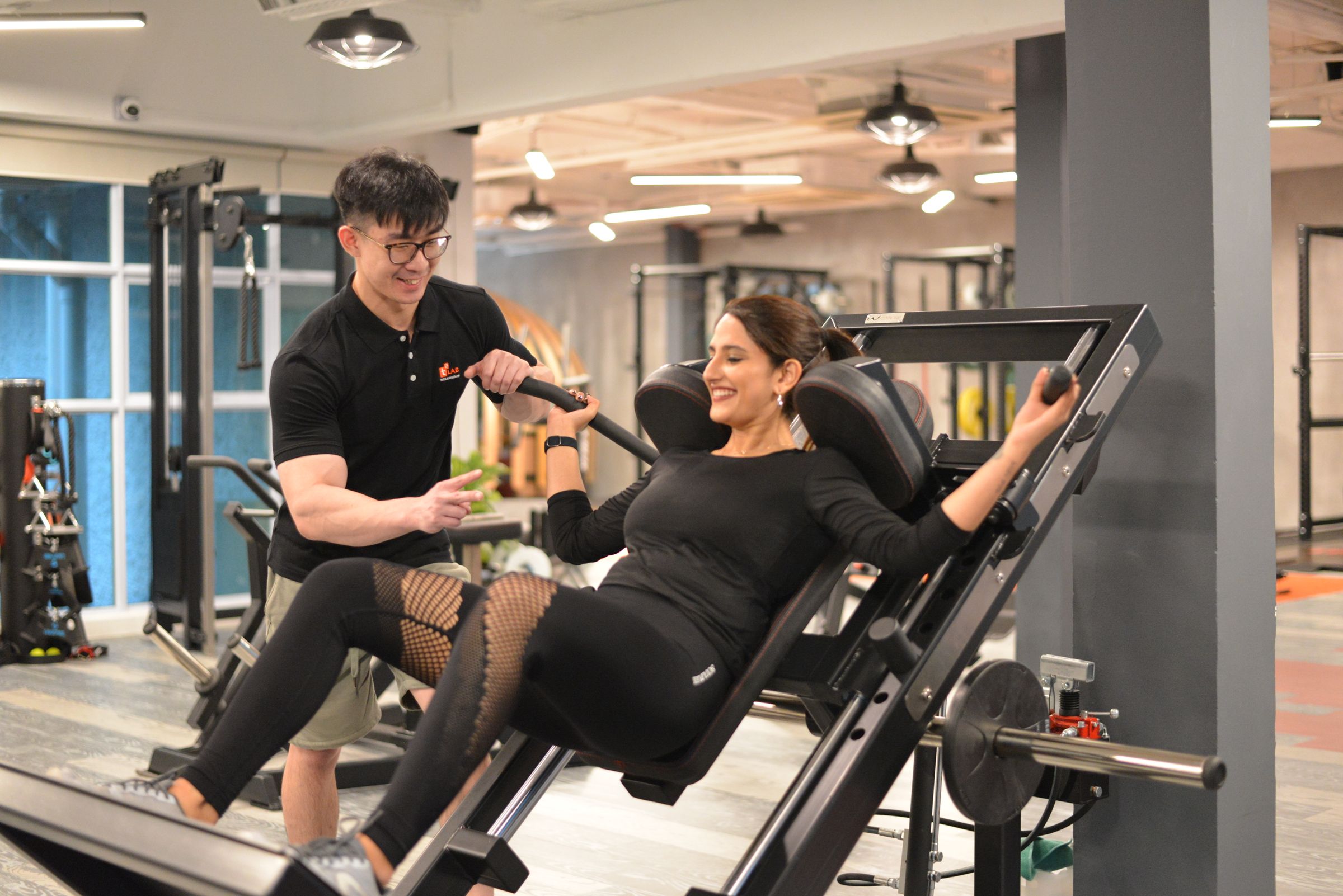
Two sessions a week, working the major muscle groups, provide a practical foundation. One manageable session can be a useful beginning if you are starting from none; build towards two as the habit settles. Resistance exercise supports muscle strength and bone health, while regular activity can improve insulin sensitivity, helping the body use glucose more effectively. Bone-health guidance and physical-activity guidance explain these benefits.
A simple programme might include a squat or sit-to-stand, a hip-hinge movement, a push, a pull and a carry. Machines, free weights, resistance bands and body weight can all have a place. The useful challenge is appropriate to your starting point and increases gradually as you become stronger.
A good trainer can be especially valuable at the beginning, or when returning after a long break. Look for someone who teaches technique, takes injuries and limitations seriously, and gives you a programme you can understand. A few well-used sessions can make independent training much less intimidating.
Progress may mean another repetition, better control, a little more resistance, or an everyday task that feels easier. Those are worthwhile results.
3. Find a sport that brings you back
Tennis, pickleball, racquetball, a friendly running club: choose something you can imagine doing next month as well as next week.
A regular game or group run puts movement and company into the same appointment. It creates a reason to finish work, leave the house and see people whose lives extend beyond your inbox. You can care about improving without turning every session into a test.

The activity itself also matters. Aerobic exercise supports cardiovascular fitness and glucose regulation, and regular physical activity can reduce symptoms of anxiety and depression. The social setting adds opportunities for friendship; it does not make any particular sport a guaranteed longevity treatment. WHO's overview sets out the broader health benefits.
One or two enjoyable sessions a week are a good anchor. Their contribution depends on how long and how actively you play. Alongside brisk walks and other exercise, work towards the general adult guideline of 150–300 minutes of moderate activity, or 75–150 minutes of vigorous activity, each week. Moderate effort usually lets you talk but makes singing difficult. Adult activity guidance.
Start at a level you can recover from. Take an introductory lesson, join the gentler group, warm up and let your capacity develop. Consistency becomes easier when the session is something you look forward to.
4. Give your muscles enough protein
Training creates a demand for recovery. Eating enough protein helps supply the building material.
For healthy adults who exercise regularly, sports-nutrition guidance commonly uses about 1.4–2.0 grams of protein per kilogram of body weight a day, roughly 0.6–0.9 grams per pound. That translates to about 70–100 grams at 50 kg (110 lb), 100–140 grams at 70 kg (154 lb), and 125–180 grams at 90 kg (198 lb). These are useful ranges for active people, with individual needs shaped by training and health. ISSN position statement.
Make a substantial protein source part of each main meal. Fish, chicken, eggs and Greek yoghurt are convenient options; an occasional lean steak can fit too. Vegetarian eating can also support muscle, using foods such as tofu, tempeh, beans, lentils and dairy where appropriate. Research has shown that adequately planned plant-based protein intake can support gains from resistance training. A protein-matched training study.

A generous serving of fish or chicken at lunch or dinner can make the daily total easier to reach. Whey protein isolate can fill a gap on a busy day. Depending on the product, a serving often supplies around 20–30 grams; check the label for protein per serving and the number of scoops. One or two servings may be convenient, but they are only useful if they help meet your needs.
Spread protein across meals instead of leaving almost all of it until dinner. Keep vegetables, fruit, fibre-rich foods and enough overall energy in the picture too. If you have kidney disease or a prescribed diet, agree your protein target with your clinician or dietitian.
5. Protect the hours that restore you
Sleep deserves a place in the diary alongside work and training. Attention, mood, performance and recovery are all harder to sustain when short nights become routine.
Aim for at least seven hours of sleep on a regular basis, with many adults needing seven to nine. Allow enough time in bed to make that possible. Seven hours between closing the laptop and the alarm leaves little room for winding down or falling asleep. Sleep-duration consensus.
A late flight, jet lag or an unusually demanding evening will happen. Resume a workable routine as soon as circumstances allow, rather than letting an exception set the pattern for the month.
Keep the bedroom dark, quiet and comfortably cool. An eye mask and earplugs can be useful at home and particularly when travelling. A consistent waking time, a calmer end to the evening and attention to late caffeine or alcohol are sensible starting points. Regular daytime activity can support better sleep too. NHS sleep guidance.

Magnesium glycinate is sometimes marketed for sleep, but evidence for magnesium as a sleep treatment remains limited. If you are considering it, check the elemental magnesium content and discuss suitability with a clinician or pharmacist. The US adult upper limit from supplements and medicines is 350 mg of elemental magnesium daily, unless a clinician advises otherwise. The weight of the magnesium compound is a different number; kidney problems and medicine interactions also matter. NCCIH evidence summary and NIH magnesium guidance.
Persistent insomnia, loud snoring or ongoing daytime sleepiness deserve medical attention. Better sleep sometimes requires help beyond a better bedtime routine.
Take stock every few months
A quarterly check-in can give these habits some perspective. Note your waist circumference, a few strength measures, how a familiar walk or run feels, and your usual sleep and energy. Measure your waist at the same anatomical point, under similar conditions, and compare trends over months.
If body-composition data helps you, an InBody assessment or a DXA scan, often called DEXA, can add information. InBody uses bioelectrical impedance; DXA estimates fat and lean soft tissue using low-dose X-rays. Neither produces a perfectly precise measure of muscle gain or loss. Hydration and testing conditions can affect results, particularly with bioimpedance. Use the same method and device where possible, and follow a consistent preparation protocol. Body-composition assessment guidance.
Make the review quarterly if that cadence is useful. Scanning everyone every three months is not an established health recommendation. Decide whether a scan will change your plan, and agree the timing with a qualified professional. Clinical bone-density testing has its own indications and schedule. ISCD positions.
A difficult quarter may bring a larger waist, fewer training sessions or lower fitness. That is information you can use. It might suggest protecting two gym appointments, making lunch more substantial or reducing the number of late nights. Maintenance through a demanding period can be a good outcome.
Keep ordinary preventive care in view as well: blood pressure, cholesterol and glucose testing when appropriate, along with recommended screening. Body-composition numbers describe only part of health.
Keep the life you want within reach
These habits reinforce one another. A walkable neighbourhood makes movement convenient. A regular sport gives the week some company. Strength training and adequate food support physical capacity. Sleep helps you return to work and activity with more to give.
The details will change across your thirties, forties and fifties, and again in later decades. Injuries, illness and responsibilities may require adjustments. There is still value in preserving the capacity you have and building what you can.
Think in practical terms: enough strength to carry what you need, enough aerobic fitness to enjoy a long day outside, enough energy to contribute to your work and relationships. For many people, meaningful adventures and demanding projects can continue into their sixties, seventies and beyond.

The purpose is to keep participating in your own life, with room for curiosity, friendship, useful work and the occasional ambitious journey.
That is part of living a full, sovereign life. Health truly is wealth.
Research checked 30 October 2026. General health information; adapt exercise, nutrition and testing to your circumstances with qualified guidance. Photographs are illustrative archival images.
Cover photograph: Lens by Benji / Unsplash. Unsplash licence. All seven images are real photographs used illustratively, with photographer credits. No endorsement by the people or venues pictured is implied.
Sources & further reading
- Daily steps and health outcomes in adults, systematic review, 20252026-10-30
- NIAMS: Exercise for your bone health2026-10-30
- HHS: Physical Activity Guidelines for Americans, 2nd edition, 20182026-10-30
- WHO: Physical activity, 20242026-10-30
- CDC: Adult activity overview2026-10-30
- ISSN position stand: protein and exercise, 20172026-10-30
- Hevia-Larrain et al.: protein-matched plant-based and omnivorous diets, 20212026-10-30
- AASM/SRS: adult sleep-duration consensus, 20152026-10-30
- NHS: Sleep habits and seeking help2026-10-30
- NCCIH: Magnesium supplements for sleep disorders2026-10-30
- NIH ODS: Magnesium health-professional fact sheet2026-10-30
- Obesity Medicine Association: body-composition assessment statement, 20222026-10-30
- ISCD: Official adult positions, 20232026-10-30