The midterms hit Wall Street where it was most exposed
Democratic gains have put data-center construction under new scrutiny. The risk runs through chip orders, electricity networks and enormous financing commitments. How much of the boom can survive a slower, more expensive buildout?

For a day, Wall Street appeared comfortable with the Democrats' victory. The S&P 500 rose 1.6% on Wednesday, November 4.
By Thursday's close, the S&P had fallen 4.4% and the Nasdaq Composite 5.5%. The broad market's best day in three months had been followed by its worst since the April 2025 tariff shock. Shares connected to AI infrastructure led the retreat.
Both reactions have a logic. An opposition Congress can restrain a president, scrutinize spending and reduce the prospect of abrupt legislation. But the election also strengthened politicians who want tougher conditions on the physical construction behind the AI boom. For investors, a check on Washington and a check on data-center development are different propositions.
The more consequential risk is a widening gap between the money already committed and the dates when that investment starts earning a return. A building can be financed and its chips ordered while its electricity supply, permits or customer delivery date remain unresolved. The election has made that gap harder to ignore.

What voters actually changed
The November 3 vote gave Democrats projected control of both chambers of Congress. Seven Republican Senate seats flipped: Texas to James Talarico, Maine to Troy Jackson, Ohio to Sherrod Brown, North Carolina to Roy Cooper, Iowa to Josh Turek, Kansas to Adam Hamilton and South Carolina to Annie Andrews. Jackson defeated Susan Collins; Brown defeated Jon Husted.
The governor changes were just as consequential for investment decisions: Gina Hinojosa defeated Greg Abbott in Texas; Keisha Lance Bottoms won Georgia, Amy Acton Ohio, Rob Sand Iowa and Aaron Ford Nevada. In the House, Bob Harvie's defeat of Brian Fitzpatrick in Pennsylvania's 1st District and Janelle Stelson's victory over Scott Perry in the 10th illustrated the breadth of the shift. These are reported race calls, with certification still ahead.
The vote was about more than AI. AP's survey found roughly three-quarters opposed a local data center, but only about one-quarter deemed it crucial to their congressional vote; affordability and government corruption ranked higher.
For Trump, the immediate change is political; the institutional change arrives with the new Congress in January. Democratic chairs can set hearing agendas and investigate executive decisions. The Senate can block nominees, including judges. Congress has power over appropriations. Those are substantial constraints, even without a new law.
Trump retains the presidency, executive powers granted by existing law and the veto. Overriding a veto requires two-thirds of both chambers. Most ordinary legislation also faces the Senate's 60-vote cloture threshold under current rules. Winning a majority does not give Democrats unilateral control over tax or AI policy.
The resulting tension is familiar: stronger scrutiny can improve government while recurring disputes over funding make planning harder. Investors should distinguish oversight, which committees can begin, from legislation, which needs votes and a path past the president. The market can reprice either possibility long before a policy takes effect.
Why the selling spread beyond the obvious names
Thursday's damage was steepest among companies selling the components of the buildout. Reuters' end-of-day roundup put the Philadelphia semiconductor index down about 12%, Nvidia down 9%, AMD and Micron down roughly 17% each, and SanDisk down 22%. All 11 S&P sectors declined. These are rounded reported moves, not intraday quotes.
The pattern matters. A cloud operator buying fewer machines is a revenue problem for the companies supplying chips, memory, networking and electrical equipment. A delayed campus also postpones electricity consumption and the cash flows expected by its lenders and landlords. Reuters reported selling across CoreWeave, Nebius, IREN, Applied Digital, GE Vernova and Constellation Energy as well as the largest technology companies.
This was not a concern invented after the vote. AP reported that AI-related shares had already been volatile for months amid worries over borrowing costs and valuations. The new political uncertainty landed on an investment cycle already under examination.
Nor was this a simple flight from everything American. Reuters reported a broadly unchanged dollar, a roughly 1% rise in gold and a 6% decline in bitcoin. Short-dated Treasury yields fell as traders reassessed the rate outlook. That combination is more consistent with investors reducing risk and reconsidering growth than with a single verdict on national credibility.
A share-price fall is not itself a canceled construction contract. It does, however, make raising equity more expensive. If lenders also demand higher compensation, projects that looked viable under cheaper financing can become harder to complete. Market prices can therefore begin to affect the investment plans they were initially reacting to.
What a data center actually contains
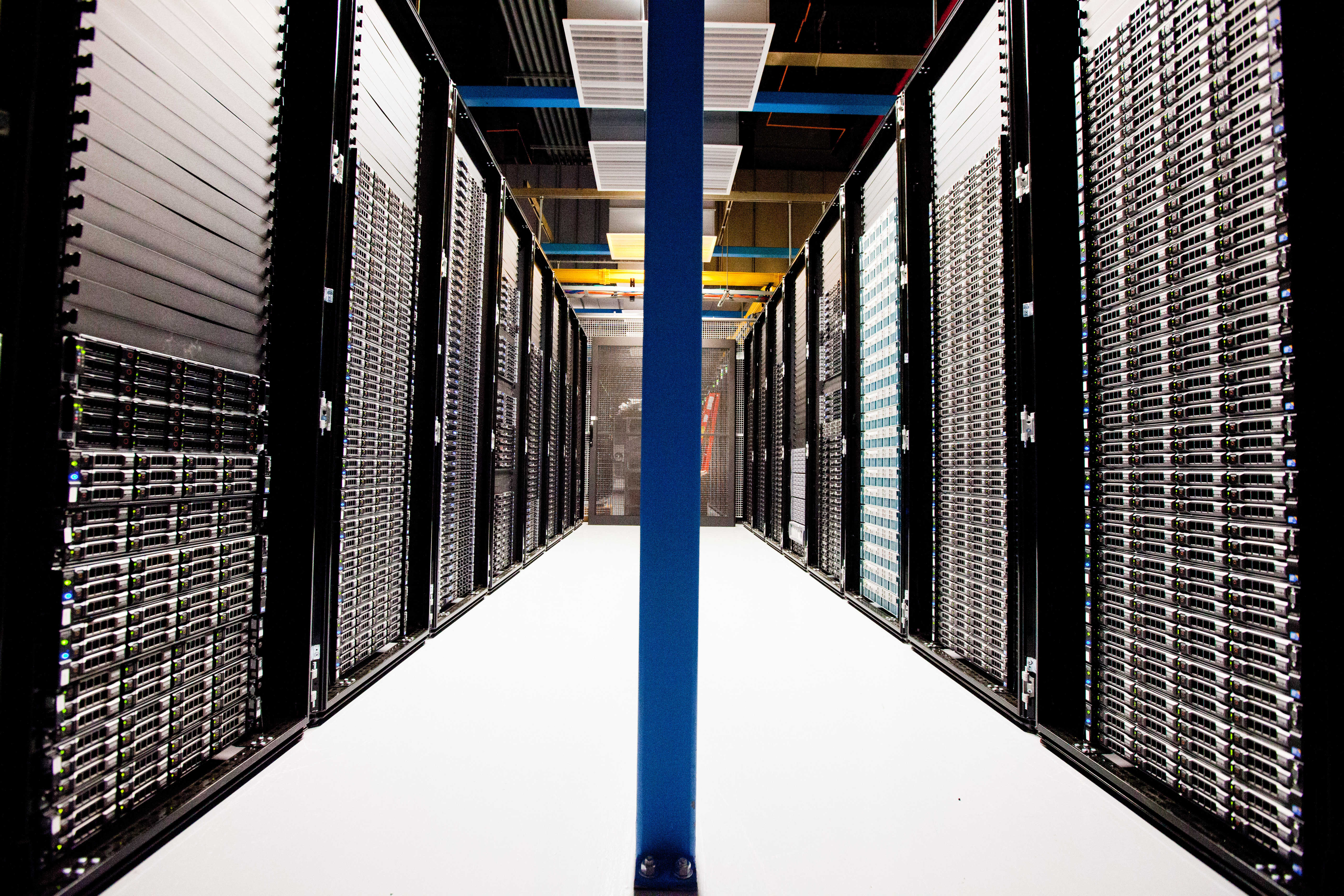
A data center houses the computers, storage and networks that run digital services. AI facilities require particularly dense clusters of processors, fast connections between them, reliable electrical supply and cooling. Training builds a model; inference runs it for users. The two activities place different demands on the equipment and on how close it must be to customers.
The business also has several layers. A developer may provide land and a powered building. A colocation operator rents space and infrastructure. A cloud provider supplies the machines and sells computing services. A specialist provider such as CoreWeave concentrates on AI computing. The party announcing a campus is not necessarily the party financing every component or carrying every operational risk.
That distinction explains why a gigawatt announcement needs scrutiny. A planned grid connection, contracted power and a functioning facility are different stages. Megawatts measure power capacity; they do not establish how much equipment is installed, how intensively it runs or how much revenue it produces. A facility drawing 100 megawatts continuously would use 876,000 megawatt-hours in a year. That is arithmetic, not a forecast for a particular site.
The scale is becoming material to electricity systems. Berkeley Lab's June 2026 update projects U.S. data centers could consume 11.8% of national electricity in 2030 in its reference case, with a wider modeled range of 9.5%-15.3%. Those are scenarios, not present-day consumption.
Globally, the IEA's April outlook put data-center demand at 485 terawatt-hours in 2025 and projected 950 in 2030, about 3% of world electricity. National averages conceal much larger pressures where facilities cluster. A region needs enough generation and network capacity at the time the customer wants to connect.
How much of the economy is riding on it?
There is no single useful percentage called “the AI share of the economy.” Construction, hardware investment, company revenue and stock-market value measure different things. Mixing them produces impressive numbers and poor analysis.
Start with physical construction. The Census Bureau's preliminary September figures put private U.S. data-center building work at a seasonally adjusted annual rate of $96.5 billion, against $50.7 billion a year earlier. That is about 4.4% of all U.S. construction spending and 12.2% of private nonresidential construction, calculated from the same release. An annual rate extrapolates a month's pace; it is not the amount spent in September. This construction measure does not capture the entire hardware and software investment.
Corporate budgets are much larger. Amazon, Alphabet, Microsoft and Meta collectively forecast roughly $720-$740 billion of 2026 capital expenditure. This is a simple sum of management guidance, not an estimate of U.S. AI spending: the budgets are global, include other activities, and use different lease-accounting conventions.
- Amazon: approximately $220 billion, on its cash-capital-expenditure measure.
- Microsoft: approximately $170 billion, on its reported capital-expenditure measure, which includes finance leases at commencement.
- Alphabet: $195-$205 billion, with spending heavily directed toward technical infrastructure.
- Meta: $135-$145 billion, including principal payments on finance leases.
GDP requires another adjustment. A Federal Reserve staff paper published in December 2025 modeled data-center investment adding 0.75-1.11 percentage points to 2026 growth before imported inputs. Its rough import adjustment reduced that range to 0.33-0.49 points. This is a conditional forecast of the contribution to fourth-quarter-over-fourth-quarter growth, not a measured result or the sector's share of GDP. It demonstrates why buying imported equipment cannot simply be counted as an equal addition to domestic production.
The exposure in equity markets is different again. Nvidia, Microsoft, Amazon, Alphabet, Broadcom and Meta together represented 26.5% of SPY, the S&P 500 tracker, on November 4, counting both Alphabet share classes. That is a selected group of exposed companies, not a claim that 26.5% of the index's business is AI. Their existing software, advertising and retail businesses matter too. But their weight explains why reassessing a single investment theme can move an ostensibly broad portfolio.
The companies do not face the same problem
Nvidia is exposed to the customers' construction timetable. Its latest reported quarter, ended July 26, produced $89.0 billion of Data Center revenue out of $96.2 billion in total revenue, approximately 92.5%. The segment includes more than generative AI, but the concentration is unmistakable. A delayed deployment need not eliminate demand; it can move orders and cash receipts into a later period. That distinction matters for a valuation built around rapid growth.
Microsoft has already acknowledged delivery slippage. On October 28, CFO Amy Hood reported $45.2 billion of quarterly capital expenditure and said some anticipated third-party capacity had been delayed. The company put calendar-2026 spending at about $170 billion and expected shifted deliveries in the second half of its fiscal year. It also generated $58 billion of operating cash flow and $18.6 billion of free cash flow in the quarter. Microsoft has resources to manage delays; suppliers counting on its acceptance dates may have less flexibility.
Bloomberg's November 5 reporting supplied a more granular account. Citing people familiar with the arrangements, it said Microsoft was tightening oversight of projects involving IREN, Nebius and Nscale, stepping away from some sites and reassessing further deals. It described cabling problems at an IREN project in Texas and a canceled Nscale agreement in Britain linked to lengthy grid-power delays. Those details are Bloomberg's reporting, not findings independently established here. They show why the election cannot explain every project problem: construction and connection risks were already present.
Amazon shows strong demand and the cost of meeting it. AWS generated $46.0 billion of quarterly revenue, up 39%, and $17.8 billion of operating income. Yet Amazon's trailing-twelve-month free cash flow was negative $42.4 billion, primarily because property-and-equipment purchases rose sharply. AWS revenue is not all AI revenue, and company-wide free cash flow is not the profitability of an individual data center. Still, the combination captures the central financing question: how much cash must be committed before the growth becomes self-funding?
Alphabet and Meta monetize capacity in different ways. Alphabet spent $51.4 billion in the third quarter and reported negative quarterly free cash flow of $9.1 billion, although free cash flow over the trailing year remained positive. The quarter also included an EU fine payment and inventory buildup. It warned that third-party compute would pressure near-term cloud margins and that infrastructure spending would raise depreciation and operating costs.
Meta reported $34.91 billion of quarterly capital expenditure. It argues that AI improves advertising through engagement, recommendations and monetization, while newer initiatives take longer to generate returns. That creates a different test from selling GPU hours: investors need to judge incremental advertising earnings against a growing infrastructure bill. Neither company should be valued as though each dollar of AI spending becomes an immediate dollar of profit.
For leveraged builders, time is money
CoreWeave offers a particularly clear view of the financing problem. In the June quarter it reported $2.575 billion of revenue, $640 million of net interest expense and a $626 million net loss. Interest alone was about a quarter of revenue. The company also reported roughly $104 billion of revenue backlog, expressly subject to delivery and service-availability requirements.
The backlog supports the case for investment. It is not cash already collected, nor does it remove the need to build and operate the capacity. A delay can leave financing costs running before service revenue starts. Positive adjusted EBITDA cannot settle that question because it excludes interest and depreciation, both central costs in a business built around expensive equipment.
The same timing problem reaches suppliers outside the technology sector. GE Vernova reported 122 gigawatts of gas-power equipment backlog and slot reservations in its third-quarter release. This covers a broader market than data centers and combines different forms of commitment; it should not be treated as guaranteed AI revenue. It does show how expectations for electricity demand reach industrial order books years ahead.
Consider an illustrative project financed with $1 billion of debt at 8%. A six-month delay entails about $40 million of interest on that fully drawn amount before considering fees, construction costs or any revenue. Actual arrangements differ, and borrowing may be drawn in stages. The point is the sensitivity to time. If the completed capacity also rents for less than expected, the project suffers both a longer wait and a weaker return.
This is where a political dispute can become a financial one. A permit review changes the completion date. A later completion changes cash flow. A lender then asks for more protection, a customer chooses another supplier, or shareholders contribute more capital. None of those outcomes requires AI demand to disappear.

The fight is over costs, land and enforceable promises
Texas makes the connection between electoral geography and capital spending particularly clear. JLL's year-end 2025 research counted 6.5 gigawatts of capacity under construction in the state and forecast that it could overtake Virginia as the largest market by 2030. That forecast predates the election. JLL also reported grid-connection timelines averaging four years or longer, a constraint already pushing development toward new locations.
AP reported that Hinojosa would block permits where projects failed to offer Texans a good deal or residents lacked a say, while Acton pledged conditions on Ohio developments. AP also cited an analysis finding restrictions passed in 44 of 45 completed local referendum counts. That is evidence of a broad local constraint, not proof that every Democrat supports the same policy.
Residents' concerns are concrete. The electricity bill includes the cost of supplying power and building networks, not just the power consumed inside a server hall. A utility can invest on the expectation of a large new customer, only to discover that the customer arrives late, needs less capacity or leaves. Who then pays for the unused infrastructure?
Ohio has already tried to allocate that risk. Its Consumers' Counsel says the approved AEP Ohio tariff requires new large data centers to pay for at least 85% of contracted electricity capacity for up to 12 years, even if they use less. The agency also distinguishes temporary construction employment from the relatively small permanent workforce. These are reasons for communities to examine the terms of a project rather than accept its headline investment value.
At the federal level, Senator Ron Wyden's October proposals would impose an excise tax on operators and remove access to certain tax benefits, including 100% bonus depreciation. Roll Call reported those proposals before the election. They are not enacted tax changes. If adopted, restrictions on deductions could change the timing of after-tax cash flows even for projects that obtain permits.
The industry is responding. OpenAI's November Community Compact promises, for sites it owns and operates, greater disclosure, narrow limits on confidentiality with public officials and payment of power and incremental infrastructure costs. It also promises financial assurances against costs left behind by delayed or canceled projects. Those are corporate commitments; their value to a community depends on site-specific agreements, enforcement and performance.
The sovereignty question is about capacity and control
There is a national interest in being able to develop and run strategically important computing systems at home. There is also a public interest in deciding how land, water, tax concessions and electricity networks are used. Treating either interest as illegitimate makes a durable settlement less likely.
A blanket restriction could defer useful capacity and shift investment toward other states or countries. But relocation is not frictionless: workloads differ in their sensitivity to distance, and customers face data-residency and governance requirements. An available site is useful only if it can supply the appropriate infrastructure and meet the customer's obligations.
Nor does a domestic building by itself establish sovereignty. The customer may still rely on a foreign chip supply chain, a single cloud platform or a financing arrangement that limits its options. National capability includes the ability to obtain equipment, secure power and keep essential services operating under terms the country can sustain.
The strongest outcome would be a clearer bargain: published resource requirements, credible connection dates, financial security for shared infrastructure and enforceable benefits for host communities. It could raise upfront costs while reducing the risk of litigation, reversal and unplanned subsidies later. That is an analytical possibility, not an announced policy package.
For markets, three paths remain plausible. A negotiated buildout proceeds at higher but more predictable costs. A prolonged delay leaves suppliers and leveraged developers waiting for cash flows. A demand disappointment reveals that some capacity would have earned inadequate returns even without political intervention. The third risk should not be concealed by blaming every difficulty on regulation.
The useful evidence from here is specific: which permits change; whether utility agreements allocate costs to developers; whether promised capacity actually becomes operational; how customer contracts respond to missed deadlines; and whether cloud revenue turns into cash after equipment purchases, interest and maintenance. Announced gigawatts and contracted backlog deserve attention, but delivered capacity and collected cash ultimately carry the argument.
For a household or internationally active business, the practical sovereignty lesson is narrower than a call to move money abroad. Review concentration in investments and essential providers. A second regulated bank and a tested payment route can improve continuity; a foreign account may help where there is a real cross-border need. Neither protects a technology portfolio from falling prices. Currency risk, deposit protection and reporting obligations still matter.
The election has changed the people who negotiate the terms of the buildout. The unresolved question is whether they can produce terms that communities accept and capital can finance. That will say more about America's competitiveness than either Wednesday's relief rally or Thursday's panic.
Research current through the U.S. market close on 5 November 2026, with reporting checked early 6 November. Race calls remain subject to certification. Management forecasts and modeled scenarios are identified as such. Calculations are by Sovereign.
Cover photograph: Cooling equipment on a data-center rooftop in Mesa, Arizona, 23 November 2025. Rsparks3 / Wikimedia Commons, CC0. Archive photograph; no alterations.